

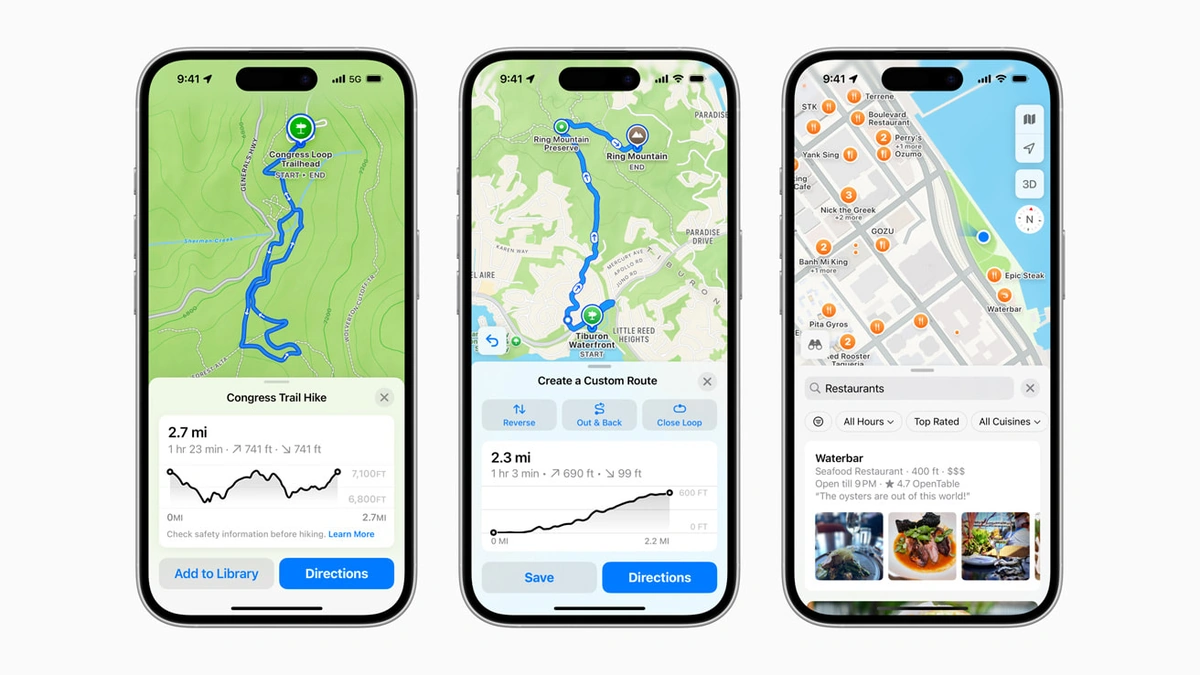
Let’s be honest, we all secretly dread the moment when our favorite, pristine app starts showing us ads. It’s like finding out your cool, indie band sold out and went mainstream. And now, whispers are turning into louder chatter: Apple Maps , that bastion of ad-free navigation, might be about to get a little… cluttered.
But before you chuck your iPhone in the nearest lake, let’s dig a little deeper. I initially thought this was a simple case of corporate greed (and, hey, maybe it is a little), but there’s actually a fascinating “why” behind this potentially seismic shift. We aren’t just talking about annoying pop-ups; we’re talking about a fundamental change in how we experience and interact with the world around us through our devices.
Why Apple’s Shifting Gears
The big question: why now? Apple has always prided itself on a premium user experience, and bombarding users with ads seems… well, un-Apple-like. But here’s the thing: Apple is under pressure. Not pressure in the sense that their company is failing, of course. But in the sense that growth is harder and harder to come by when you’ve already conquered so much of the tech world. And I mean it when I say that Apple users spend more than $1,600 on Apple’s products annually.
Consider these points:
- Revenue Diversification: Apple can’t rely solely on hardware sales forever. Services are the name of the game, and advertising is a lucrative service.
- The Competition: Google Maps has been doing this for ages. They’re raking in serious ad revenue, and Apple is likely feeling the FOMO (Fear Of Missing Out).
- Local Business Boost: Apple can sell ads to local businesses, it also benefits the consumers. Imagine seeing a promotion for a cafe right when you’re passing by; sounds pretty cool, right?
So, it’s not just about greed. It’s about staying competitive, finding new revenue streams, and, arguably, providing a more comprehensive service to users. But, and this is a BIG but, it all hinges on how Apple executes this.
How Apple Can Do Ads Right (Or Mess It Up)
The devil, as always, is in the details. We aren’t talking about simple Google Ads or banners. If Apple goes down the route of intrusive, irrelevant ads, it’s going to backfire spectacularly. No one wants a blinking banner obscuring their route. But if they do it cleverly? Well, that’s when it could be a win-win.
Here are a few ways Apple could make ads work (and a few ways they could absolutely fail):
- Non-Intrusive Placements: Subtle location markers, sponsored search results that are genuinely relevant, and unobtrusive banners on the app’s home screen are fine. Full-screen video ads that interrupt navigation? Nope.
- Relevance is Key: Show me ads for coffee shops when I’m looking for coffee. Show me ads for gas stations when my tank is low. Don’t show me ads for lawnmowers when I’m driving through downtown Mumbai.
- Transparency and Control: Give users granular control over the types of ads they see and the ability to opt-out completely. Trust me, people will pay for an ad-free Apple Maps experience.
A common mistake I see companies make is thinking that any ad is a good ad. A common mistake I see people make is not taking into account how much money a company will make and how much revenue will increase. In Apple’s case, it will more than make up for any people who are unhappy about this. The one thing you absolutely must remember about ads, is that the company can always remove them if they are doing bad.
Apple has set a very high bar for user experience, and it needs to clear that bar if it wants to introduce ads without alienating its loyal fanbase. Location data is an especially important area to consider.
The Privacy Paradox
Here’s the really sticky part: privacy. Apple has been positioning itself as the champion of user privacy, a stark contrast to Google’s more… data-hungry approach. So, how can Apple introduce targeted ads without compromising its privacy stance? What fascinates me is how they will work around this issue.
The answer, presumably, lies in anonymization and aggregation. Apple can use aggregated, anonymized data to target ads without tracking individual users. They can also leverage on-device machine learning to personalize ads without sending data to the cloud. Data privacy is going to be one of the most important parts of the user experience.
But let’s be honest: trust is hard-earned and easily lost. Apple needs to be crystal clear about how it’s handling user data and provide robust privacy controls. Otherwise, this whole ad venture could turn into a PR nightmare. Here is another internal link.
The Indian Context | A Unique Opportunity?
Now, let’s bring this back to India. For many Indians, smartphones are the primary (or only) gateway to the internet. Apps like Apple Maps are not just navigation tools; they’re essential for finding businesses, exploring new places, and connecting with the local community. Digital advertising is also extremely important.
If Apple can deliver relevant, non-intrusive ads that genuinely help users discover local businesses and services, it could be a huge win, especially for small businesses that may not have the resources for traditional advertising. I initially thought the app was for navigation, but I realize that it could be used for much more than that. As perthis article, local businesses can boost their sales with the help of digital advertising.
But there’s also a risk. India is a price-sensitive market. If Apple pushes too hard with ads, users might simply switch to cheaper (or free) alternatives like Google Maps or local navigation apps. Apple needs to tread carefully and prioritize user experience above all else. Remember that this is an article about the app, so it is important to consider the user experience .
According to local sources, targeted advertising is one of the best methods to use when marketing your business.
Will Apple Maps Ads Actually Be Useful?
Ultimately, the success of Apple Maps ads will depend on one thing: whether they provide genuine value to users. If they’re just annoying interruptions, they’ll fail. But if they’re relevant, unobtrusive, and genuinely helpful, they could actually enhance the Apple Maps experience. The whole thing sounds like a big mess, but it just might work.
What fascinates me is the potential for innovation here. Imagine augmented reality ads that overlay information onto the real world as you navigate. Imagine personalized recommendations based on your past behavior and preferences. The possibilities are endless. What fascinates me is the fact that I might actually be able to benefit from these ads.
FAQ Section
Frequently Asked Questions
Will Apple Maps ads be mandatory?
It’s too early to say for sure, but Apple will likely offer an opt-out option or a premium ad-free subscription.
How will Apple ensure user privacy with ads?
Apple will likely use anonymized, aggregated data and on-device machine learning to target ads without tracking individual users. However, it is still a work in progress.
Will this make Apple Maps cost money?
Highly unlikely. The aim is to add an additional revenue source, not to turn Apple Maps into a subscription service.
When will we see these ads in Apple Maps?
There’s no official timeline yet, but reports suggest it could be rolled out in the coming months.
Will ads make Apple Maps slower or use more data?
Ideally, no. Apple will need to optimize the ad delivery system to minimize any impact on performance or data usage.
So, there you have it. Apple Maps might be about to get a little less pristine, but it could also become a more useful and informative tool. The ball is in Apple’s court. Let’s hope they don’t drop it.